
Why Does Your Business Need the WhatsApp Business API?
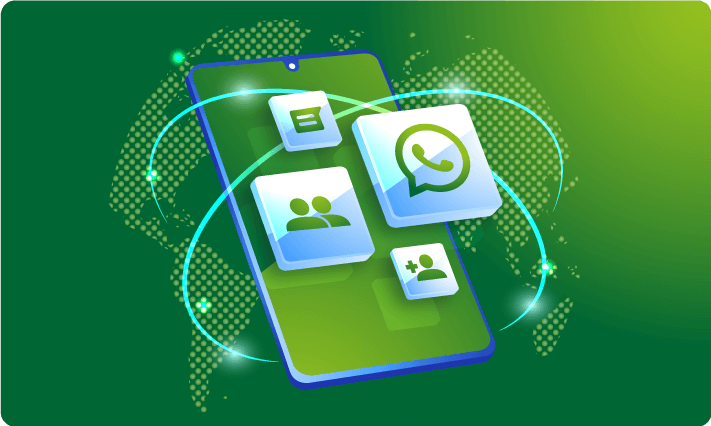
WhatsApp has become one of the most important communication channels between businesses and customers, especially as millions of users rely on it every day to communicate, ask questions, and request products and services.
However, using the regular WhatsApp Business App may not be enough when your business starts receiving a large number of conversations or when multiple employees need to communicate with customers at the same time.
This is where the WhatsApp Business API comes in. It helps businesses manage conversations at scale while adding automation, artificial intelligence, and integrations with customer management systems.
In this guide, we will explain what the WhatsApp Business API is, how it differs from the WhatsApp Business App, when your business needs it, and how it can be used for sales, customer service, and automation.
What Is the WhatsApp Business API?
The WhatsApp Business API is a solution designed for businesses that need to use WhatsApp at scale and connect it with other systems and software.
Instead of using WhatsApp only as a messaging tool, businesses can use the API to build an integrated system for managing customer conversations and connecting them with CRM systems, e-commerce platforms, automation tools, and artificial intelligence.
With the WhatsApp Business API, businesses can:
Manage a large number of customer conversations.
Allow multiple employees to handle the same business number.
Distribute conversations among team members.
Send customer notifications and updates.
Create chatbots and automate replies.
Connect WhatsApp with CRM systems.
Manage campaigns and marketing messages according to WhatsApp policies.
Track sales and customer service team performance.
What Is the Difference Between the WhatsApp Business App and the WhatsApp Business API?
The app and the API may seem similar, but they are designed for different business needs.
The WhatsApp Business App is more suitable for small business owners or businesses managed by a limited number of people.
The WhatsApp Business API, on the other hand, is designed for businesses with teams, high conversation volumes, and a need for automation and integrations with other systems.
Comparison Between WhatsApp Business App and WhatsApp Business API
Using the account on multiple devices:
WhatsApp Business App: Limited.
WhatsApp Business API: Supports using the account across multiple devices and platforms.Team management:
WhatsApp Business App: Limited.
WhatsApp Business API: Advanced through supported platforms and systems.Shared Inbox:
WhatsApp Business App: Limited.
WhatsApp Business API: Available through supported systems.Automation:
WhatsApp Business App: Basic.
WhatsApp Business API: Advanced and customizable.Chatbots and AI:
WhatsApp Business App: Limited.
WhatsApp Business API: Available through platforms and integrations.Integration with Customer Management Systems:
WhatsApp Business App: Limited.
WhatsApp Business API: Available and supports integration with different systems.Reports and Analytics:
WhatsApp Business App: Limited.
WhatsApp Business API: Advanced through supported platforms.Managing a large number of conversations:
WhatsApp Business App: Suitable for small businesses.
WhatsApp Business API: Suitable for businesses handling a large volume of conversations.
When Does Your Business Need the WhatsApp Business API?
It may be time to move to the WhatsApp Business API when you start facing challenges in managing your daily conversations.
For example, if:
More than one employee communicates with customers through WhatsApp.
The number of daily conversations continues to increase.
Some conversations are being ignored or forgotten.
You need to distribute conversations among employees.
You want to automate replies to frequently asked questions.
You want to connect WhatsApp with a CRM system.
You need to use AI in customer service.
You want reports on sales and customer service team performance.
You need to send customer notifications and messages according to WhatsApp policies.
In this situation, WhatsApp alone may no longer be enough, making the need for a WhatsApp management platform more important.
How Do Messages Work Through the WhatsApp Business API?
There are two main types of conversations you should understand when using the WhatsApp Business API.
1. Customer-Initiated Conversations
When a customer sends a message to a business, a customer service window begins according to WhatsApp's current rules.
During this service window, the business can handle the customer's inquiry and respond according to the policies that apply to the account and market.
This type of conversation is suitable for customer service, answering inquiries, and following up on orders.
2. Business-Initiated Conversations
If a business wants to start a conversation with a customer or send a message outside the customer service window, it may need to use an approved message template according to WhatsApp's rules.
These messages can be used in many situations, such as:
Order confirmations.
Shipping status updates.
Appointment reminders.
Payment notifications.
Offers and marketing campaigns that meet WhatsApp requirements.
How Do Businesses Use the WhatsApp Business API?
The WhatsApp Business API can be used for many daily business operations, not just for responding to customers.
1. Customer Service
Customer service teams can manage conversations through a shared inbox, distribute them among employees, and follow up on cases that require intervention or additional support.
2. Sales
Businesses can use WhatsApp to receive leads, collect their information, qualify them, and then transfer the conversation to the appropriate sales representative.
3. Order Notifications
WhatsApp can be connected to e-commerce systems to send updates such as order confirmation, shipping, and delivery notifications.
4. Automation
Many repetitive tasks can be automated, including welcoming customers, answering frequently asked questions, collecting information, and directing conversations to the appropriate department.
5. Artificial Intelligence
AI tools can be integrated with WhatsApp to help answer questions, suggest replies, summarize conversations, qualify leads, and transfer complex cases to employees.
How Does a WhatsApp CRM Help Manage the API?
Having the WhatsApp Business API alone does not automatically provide your team with a complete system for managing conversations.
This is where a WhatsApp CRM comes in. It turns conversations into an organized process that sales and customer service teams can manage and follow up on.
With a system such as Rabt CRM, businesses can organize conversations, customers, and team members in one place.
Key functions can include:
A shared team inbox.
Conversation assignment to employees.
Management of multiple WhatsApp numbers, depending on the system and plan.
Adding employees and managing their permissions.
Creating automated replies.
Creating workflow scenarios.
Using AI agents.
Organizing customer data.
Adding tags and classifications to conversations.
Tracking employee performance through reports.
7 Powerful Uses of the WhatsApp Business API
1. Team Conversation Management
Sales and customer service teams can manage customer conversations through one system instead of relying on separate devices or accounts for each employee.
2. Automatic Conversation Assignment
Businesses can create rules to route conversations to the appropriate employee or department based on the type of request, customer information, or keywords used in the message.
3. Answering Frequently Asked Questions
Predefined replies and automation can be used to answer questions that are repeated every day, saving employees valuable time.
4. Lead Qualification
A chatbot can collect basic customer information and identify their needs before transferring the conversation to a sales representative.
5. Sending Customer Notifications
WhatsApp can be used to send order, shipping, appointment, and notification updates according to the rules that apply to the messages.
6. Re-engaging Customers
Approved campaigns can be used to communicate with customers who have provided the appropriate consent, with the goal of re-engaging them or presenting offers related to their interests.
7. Analyzing Team Performance
Reports help businesses understand conversation volumes, response times, employee performance, and conversations that require follow-up.
How Can AI Be Used with WhatsApp?
Artificial intelligence has become an important part of customer conversation management.
Instead of requiring an employee to handle every conversation from the beginning, AI can assist during the initial stages of the conversation.
Practical applications include:
Answering frequently asked questions.
Suggesting suitable replies for employees.
Collecting customer information.
Qualifying leads.
Summarizing long conversations.
Translating messages.
Directing customers to the appropriate department.
Transferring complex conversations to a human employee.
The goal is not to replace employees, but to help them handle more conversations and save time on repetitive tasks.
Is the WhatsApp Business API Free?
The WhatsApp Business API is not simply a free application like the WhatsApp Business App.
The cost of using the WhatsApp Business Platform varies depending on the message type, market, and pricing rules set by Meta, in addition to any fees charged by the platform you use to manage the API.
Therefore, before choosing a solution, it is important to calculate the total cost based on the number of conversations and messages your business sends and the type of usage.
Can Multiple Employees Use the Same WhatsApp Number?
Yes. Businesses can use solutions based on the WhatsApp Business Platform to manage conversations from a business number through a team.
Through a WhatsApp CRM, conversations can be assigned to employees, responsibility for each conversation can be defined, notes can be added, and customer status can be tracked.
This is different from simply connecting WhatsApp to multiple devices because a CRM system adds a complete layer for managing teams, conversations, and customers.
How Does Rabt CRM Help You Manage WhatsApp?
If your business relies on WhatsApp for sales or customer service, Rabt CRM helps turn conversations into an organized process that your team can manage efficiently.
Your team can receive conversations, distribute them among employees, use automated replies, create automation workflows, and benefit from AI while tracking performance through reports.
The customer journey can look like this:
Advertisement or website → WhatsApp message → Automated reply → Customer data collection → Lead qualification → Conversation assignment → Sales representative → Follow-up → Completed sale
This approach turns WhatsApp from simply a tool for sending and receiving messages into an integrated part of your sales and customer service process.
When Is the WhatsApp Business API the Better Choice?
If you have a very limited number of customers and only one employee handling WhatsApp, the WhatsApp Business App may be sufficient.
However, as your business grows and you have a team of employees and a high volume of conversations, the need for the API and a CRM platform becomes more apparent.
Key signs that you may need a more advanced solution include:
An increase in daily conversation volume.
More than one employee handling customer service.
Delayed responses.
Missed conversations.
Difficulty following up with leads.
A need for automation.
A need for performance reports.
A need to connect WhatsApp with other systems.
Conclusion
The WhatsApp Business API is suitable for businesses that want to scale their use of WhatsApp and connect it with sales, customer service, automation, and other business systems.
However, the real value of the API becomes clear when it is used as part of an organized system for managing conversations, customers, and teams.
With Rabt CRM, businesses can manage WhatsApp conversations, assign them to employees, automate repetitive tasks, use AI, organize customer data, and monitor team performance.
If WhatsApp has become an essential part of your company's sales and customer service operations, moving from manual conversation management to a WhatsApp CRM can be an important step toward organizing operations and improving the customer experience.
Frequently Asked Questions
What is the WhatsApp Business API?
It is an interface designed for businesses that allows them to use WhatsApp at a larger scale and connect it with CRM systems, automation, AI, and other business tools.
What is the difference between the WhatsApp Business App and the WhatsApp Business API?
The WhatsApp Business App is more suitable for small businesses and limited usage, while the API is designed for businesses that need team management, high-volume conversation handling, automation, and advanced integrations.
Can multiple employees use the same WhatsApp number?
Yes. Business number conversations can be managed by an entire team using WhatsApp Business Platform solutions and supporting systems.
Can WhatsApp be connected to a CRM system?
Yes. The WhatsApp Business Platform can be connected to CRM systems to manage customer data and conversations and support sales and customer service operations.
Can AI be used with the WhatsApp Business API?
Yes. AI tools can be used to answer questions, qualify leads, suggest replies, summarize conversations, translate messages, and transfer cases that require human intervention to the appropriate employee.
Is Rabt CRM suitable for small businesses?
Rabt CRM can be suitable for small businesses that are receiving an increasing number of WhatsApp conversations, have multiple employees communicating with customers, and need better conversation management, automation, and follow-up.
Read next

WhatsApp Template Best Practices: How to Get Approved and Avoid Rejection
A practical guide to WhatsApp Business template best practices, including how to create approved templates, avoid rejection or reclassification, improve message quality, and manage customer communication effectively.
Read article
WhatsApp 24-Hour Rule: How Can Businesses Message Customers Again?
A practical guide to understanding WhatsApp’s 24-hour messaging window, what happens when it expires, and how Rabt CRM helps businesses manage follow-ups and customer conversations efficiently.
Read article
How Many Messages Can You Send on WhatsApp Business? A Guide to Messaging Limits
A practical guide to understanding WhatsApp Business messaging limits and how Rabt CRM helps you manage campaigns and conversations efficiently while avoiding messaging limit violations.
Read article